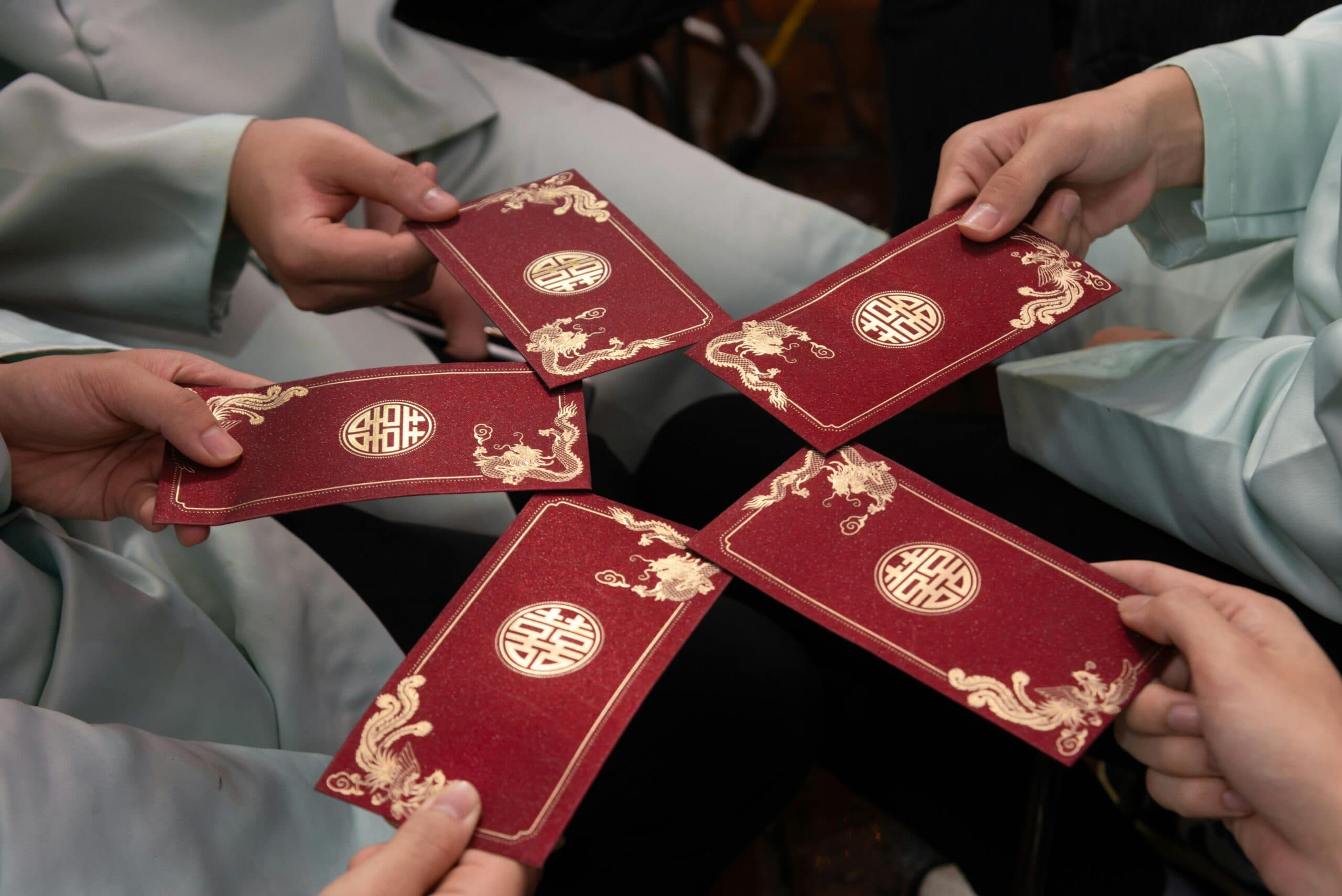
There is something almost cinematic about a Chinese wedding red envelope. It is simple. Quiet. A folded piece of red paper moving between hands like a promise that does not need much explaining.
Known as Hongbao, these envelopes are a long-standing tradition in Chinese weddings. Inside is money, yes, but the meaning is doing most of the emotional work here.
What they represent
At their core, red envelopes at weddings are a way to give blessings in a practical form. Guests offer money to the couple as a gesture of support for their new life together.
Red matters. It is traditionally associated with:
- Luck
- Joy
- Celebration
- Prosperity
So the envelope is not just packaging. It is part of the message.
Why money instead of gifts
In many Chinese wedding traditions, giving money is more common than giving physical gifts. One practical reason is simple. Weddings, especially banquet-style ones, can be large and expensive events.
So the envelope often becomes a way of saying:
“I see your beginning, and I want to contribute to it.”
There is no single universal rule for amounts. In practice, guests often consider their relationship to the couple and the formality of the wedding. In many banquet settings, people aim to give an amount that reflects the cost of hosting them, but this varies widely by region and family expectation.
How they are given to the couple
This part is more ritual than transaction.
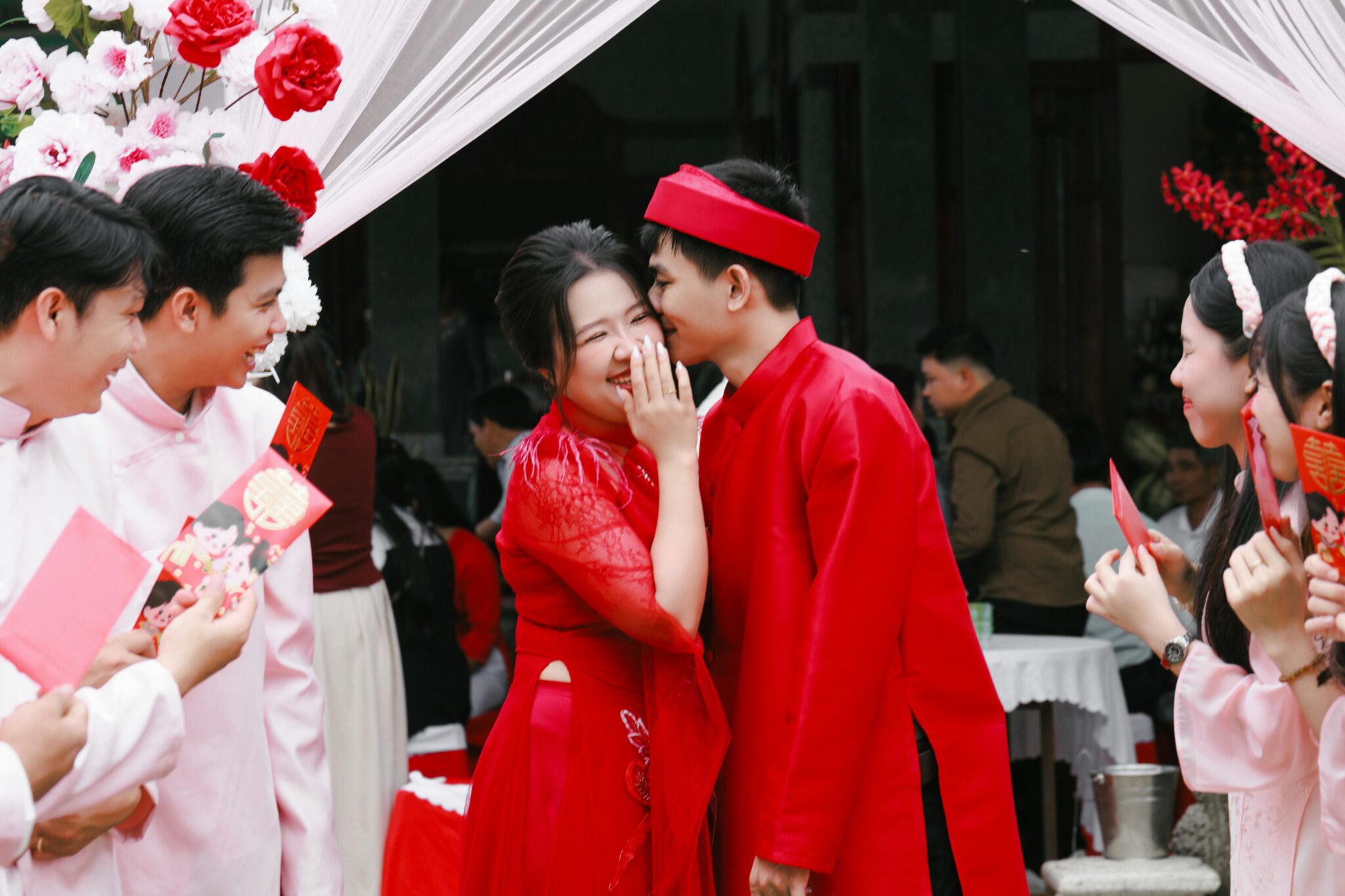
At most weddings, guests do not simply slip an envelope into someone’s pocket. There is usually a moment of arrival, often at the entrance of the venue or at a designated reception table.
Here’s what typically happens:
- Guests arrive and present the red envelope
- It is handed to a family member, attendant, or designated table host
- Names may be recorded alongside the gift amount in some weddings
- The couple usually does not open envelopes immediately
The actual exchange is brief, but it carries weight. It is polite, intentional, and slightly ceremonial, even in modern settings.
Numbers that carry meaning
Numbers are where things get a little poetic.
- 8 is associated with wealth and good fortune
- 6 is linked to smoothness and good luck
- 9 is often connected to longevity
And then there is 4, which many people avoid because its pronunciation sounds similar to the word for death in Mandarin.
This is not a rigid law everywhere, but it is a well-known cultural tendency.
The etiquette, quietly followed
There are a few common practices that tend to show up:
- Clean, crisp bills are preferred
- Names or messages are often written neatly, sometimes avoiding black ink in formal settings
- Envelopes are typically given with both hands as a sign of respect
At many weddings, envelopes are collected at a table where they may be recorded by family or attendants. Not always, but often enough that it is part of the modern wedding rhythm.
The tea ceremony moment
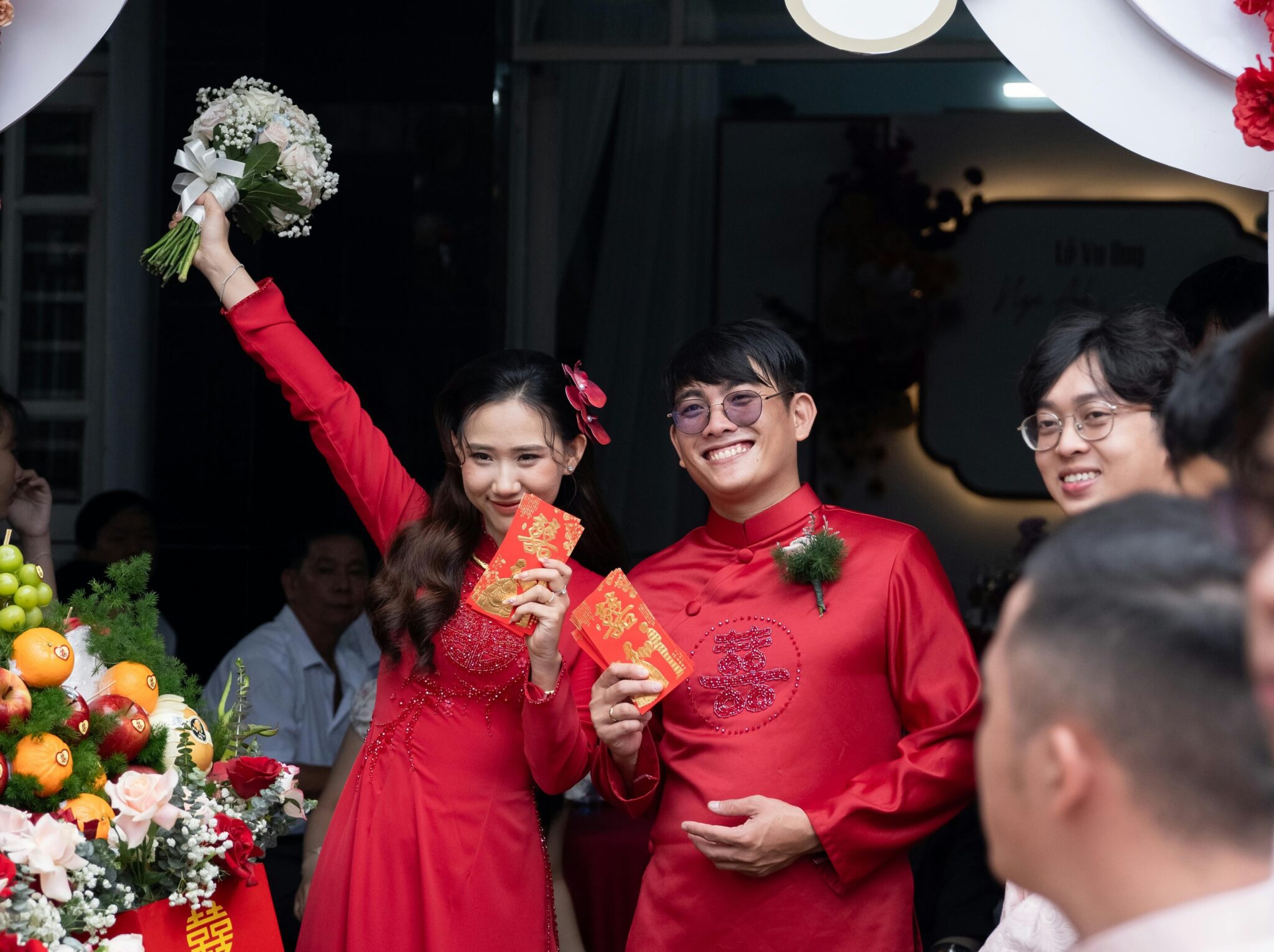
During the traditional tea ceremony, elders may give red envelopes to the couple after being served tea. This moment is less about money and more about acceptance, blessing, and family structure shifting into something new.
Sometimes gold jewelry appears here too. Sometimes it does not. That part depends on family tradition rather than a fixed rule.
Modern life, same tradition
Today, red envelopes also exist digitally in some communities through payment apps. It is faster, easier, more contemporary.
But even with digital versions, physical red envelopes are still widely used at weddings because they carry visual and symbolic weight. They feel ceremonial in a way a screen cannot quite replicate.
The part that stays the same
Across regions and generations, one thing remains consistent. A red envelope at a wedding is not just a transaction. It is participation. It is saying, in a very quiet way, that you are part of this story starting to unfold.
Everything else varies. Customs differ by region, family, and personal preference. But the intention behind it tends to stay remarkably steady.
And maybe that is why it has lasted so long. Or maybe why it travels so well too, showing up not only in traditional settings, but also with couples and families living abroad, still holding onto the same small red gesture in a different place entirely.