Destination Wedding Legal Requirements: What Couples Should Know

Article Overview
- The legal side of “I do”: Marriage laws, paperwork requirements, residency rules, and documentation can vary significantly from one destination to another. What is required in one country may be entirely different in the next.
- Before you pack your passport: From birth certificates and affidavits to translations and waiting periods, destination weddings often involve more preparation than couples expect. Understanding the requirements early can help avoid last-minute complications.
- A beautiful wedding, with or without the paperwork abroad: Many couples choose to handle the legal marriage at home and enjoy a symbolic ceremony overseas. Whether you marry abroad or simply celebrate there, knowing the rules ahead of time allows you to focus on the experience rather than the administration.
Destination weddings offer something truly special. They combine travel, celebration, and the beginning of a marriage into a single unforgettable experience.
The legal side of things may not be what inspires your Pinterest board, but understanding the requirements early can make the entire process far smoother.
After all, love is international. Paperwork usually isn’t.
A little preparation now means less time chasing documents later and more time focusing on the reason you’re travelling in the first place.
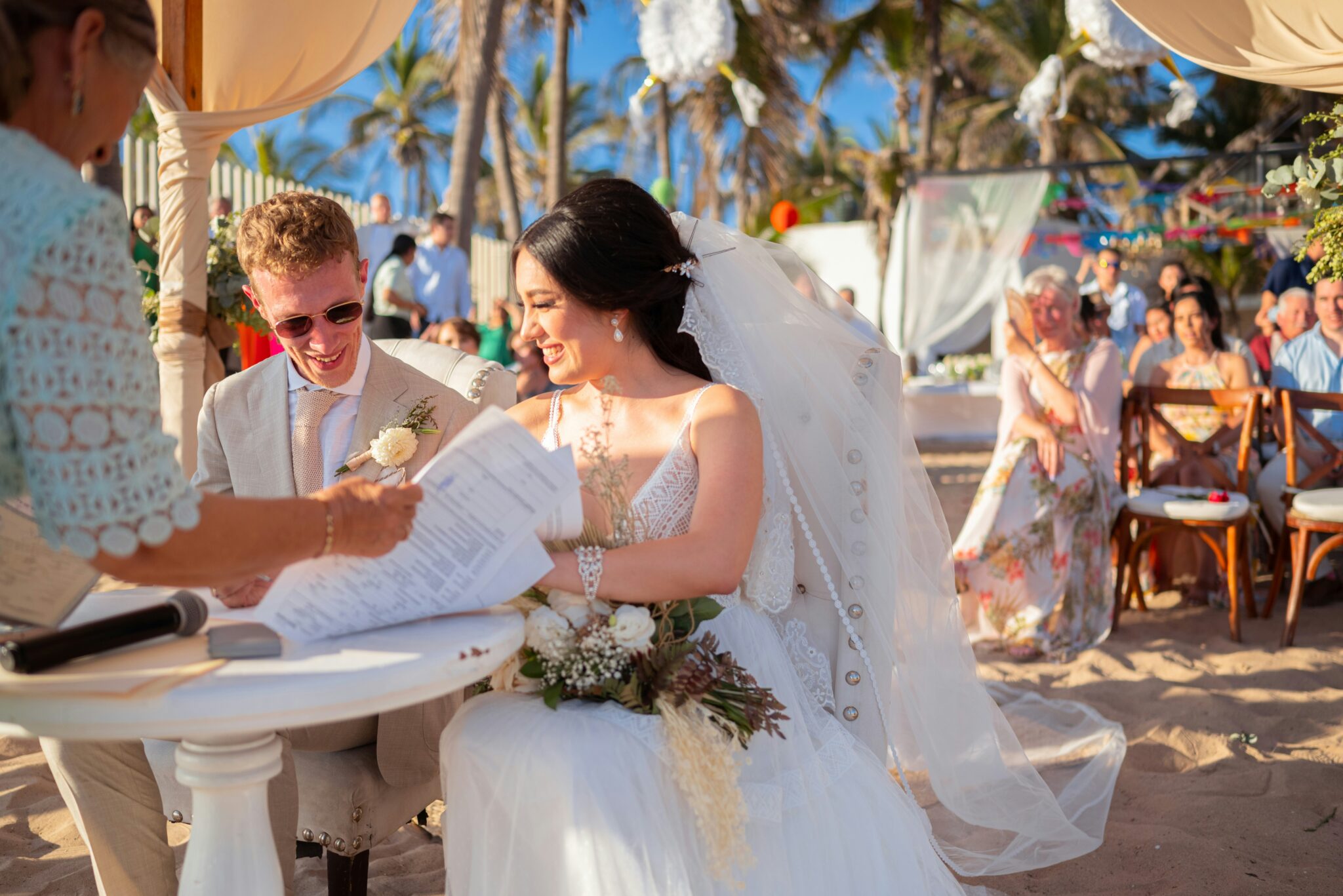
The Rules Depend on Where You’re Going
One of the biggest misconceptions about destination weddings is that the process is roughly the same everywhere.
In reality, every country has its own requirements for foreign couples who want to marry there. Some destinations make the process relatively simple. Others require additional documentation, waiting periods, residency requirements, or appointments that need to be scheduled well in advance.
The result is that two weddings that look nearly identical on Instagram can involve completely different legal processes behind the scenes.
Researching these requirements early can save you a great deal of stress later.
Your Passport Is Just the Beginning
Many couples are surprised by the amount of documentation they may need to provide.
Depending on the destination, you could be asked for:
- Valid passports
- Birth certificates
- Divorce decrees (if applicable)
- Documentation of legal name changes
- Proof of marital status
- Additional sworn declarations or affidavits
And that’s before you discover that some documents may need to be translated, notarized, certified, or submitted within a specific timeframe.
Romantic? Not particularly.
Important? Absolutely.
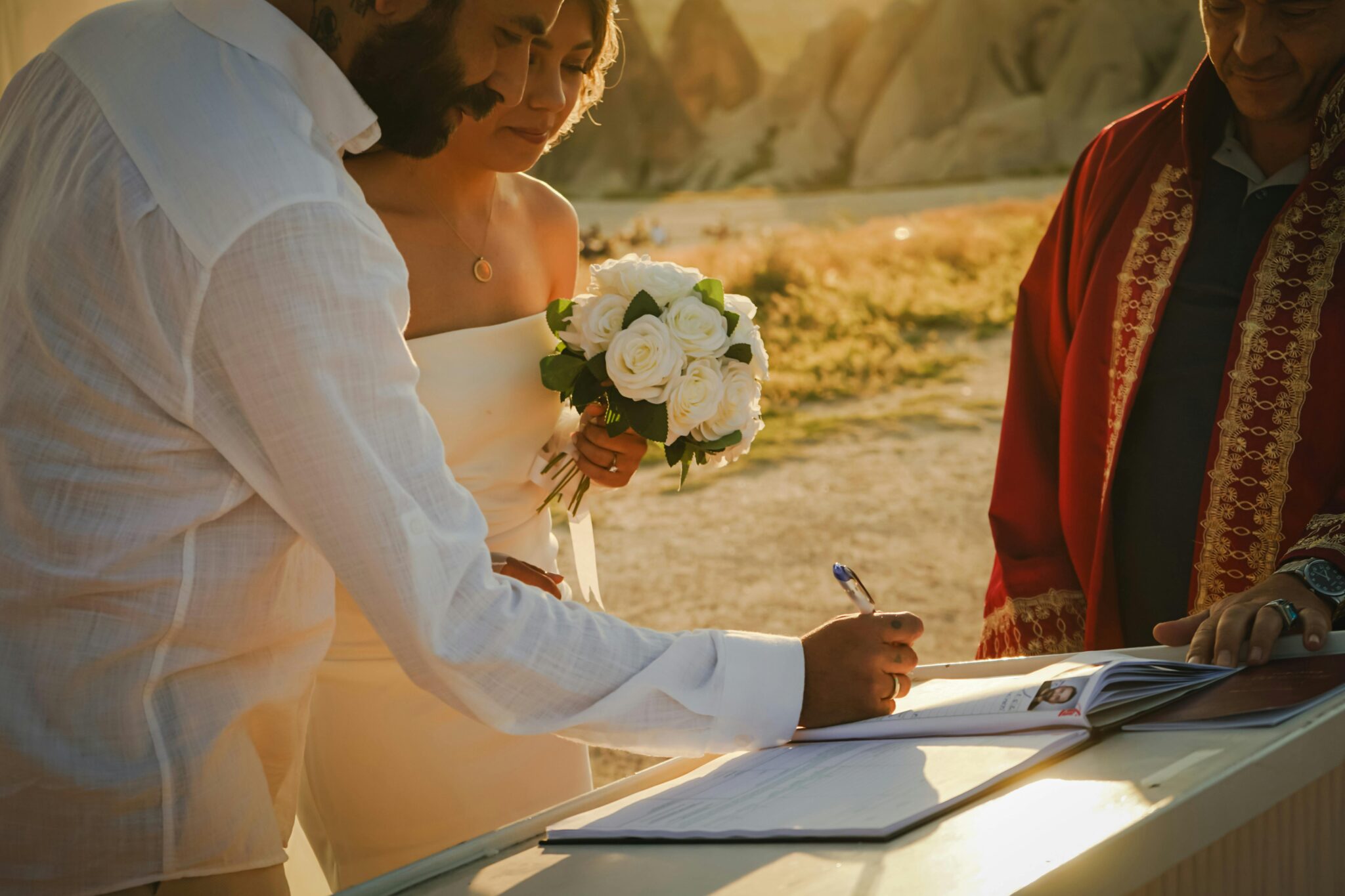
Prepare for Some Administrative Plot Twists
One of the less glamorous aspects of destination wedding planning is discovering that paperwork often comes with its own set of rules.
Some countries require official translations. Others require notarized copies. Certain destinations may ask for documents to be submitted months in advance, while others require couples to arrive several days before the ceremony.
This is why destination wedding planners often recommend starting the legal process earlier than you think you need to.
No one wants to spend the week before their wedding tracking down government forms from another time zone.
The Symbolic Ceremony Option
Here’s a little secret many destination wedding couples discover along the way… not every destination wedding is legally performed in the destination itself.
Many couples choose to complete the legal marriage paperwork at home before travelling, then hold a symbolic ceremony abroad. The ceremony looks exactly like a traditional wedding to guests, but without the additional legal complexity that can come with marrying in another country.
For some couples, this approach offers the best of both worlds: a stress-free legal process and the destination wedding they’ve always imagined.
And no guest has ever interrupted cocktail hour to ask when the official paperwork was signed.
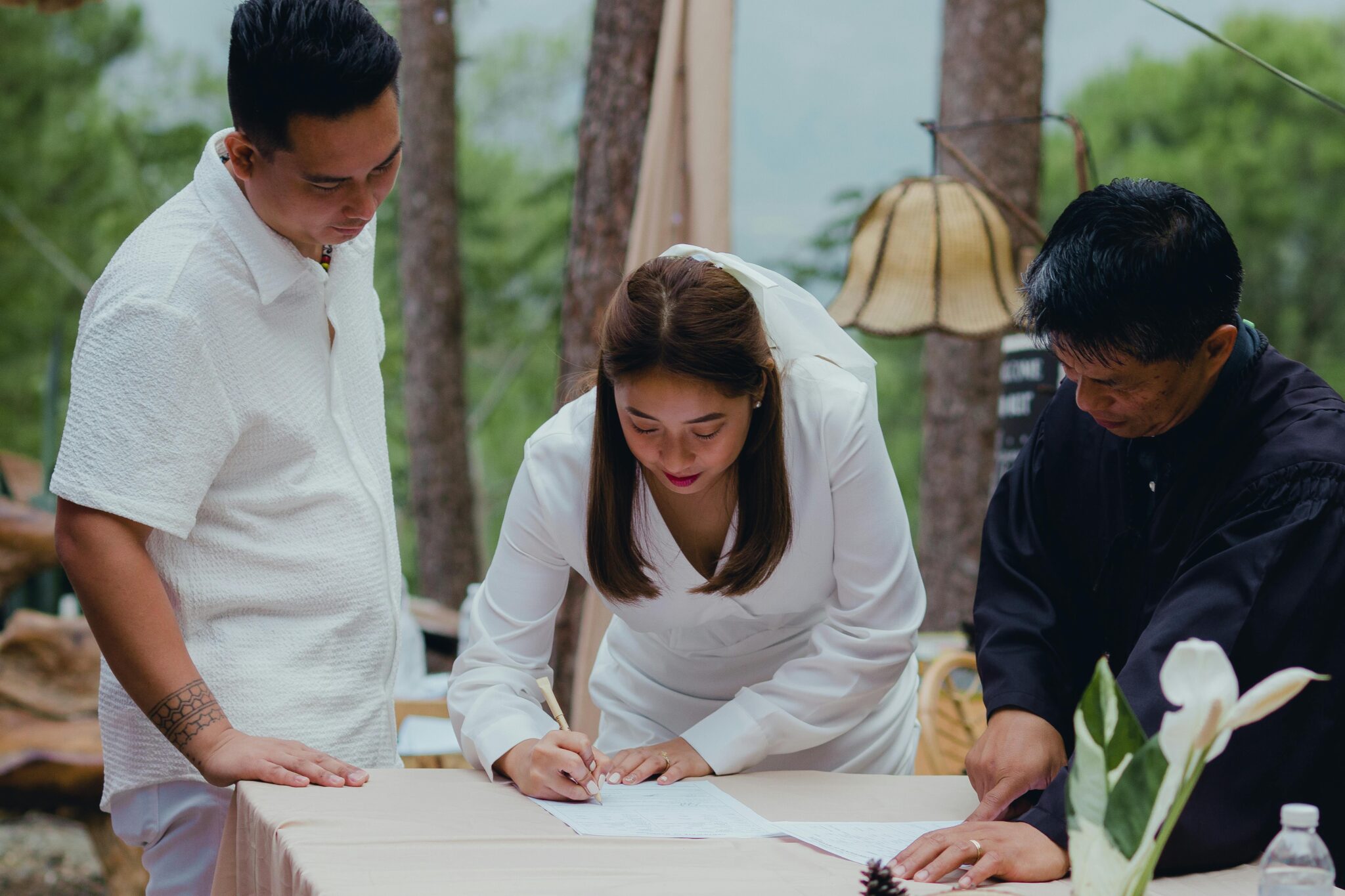
Don’t Forget the Local Details
Beyond the paperwork, local marriage regulations can vary in ways couples don’t always anticipate.
Some destinations require witnesses. Others have minimum age requirements, residency conditions, or specific rules regarding religious ceremonies.
These details aren’t usually the most exciting part of wedding planning, but they’re worth understanding before contracts are signed and flights are booked.
A beautiful destination wedding starts with knowing exactly what is required to make it happen.
The Most Romantic Thing You Can Do Is Be Prepared
Destination weddings offer something truly special. They combine travel, celebration, and the beginning of a marriage into a single unforgettable experience.
The legal side of things may not be what inspires your Pinterest board, but taking the time to understand the requirements early can make the entire process smoother.
Because the goal isn’t just arriving at your wedding day.
It’s arriving there with everything in order, so you can spend less time worrying about paperwork and more time enjoying the reason you planned a destination wedding in the first place.
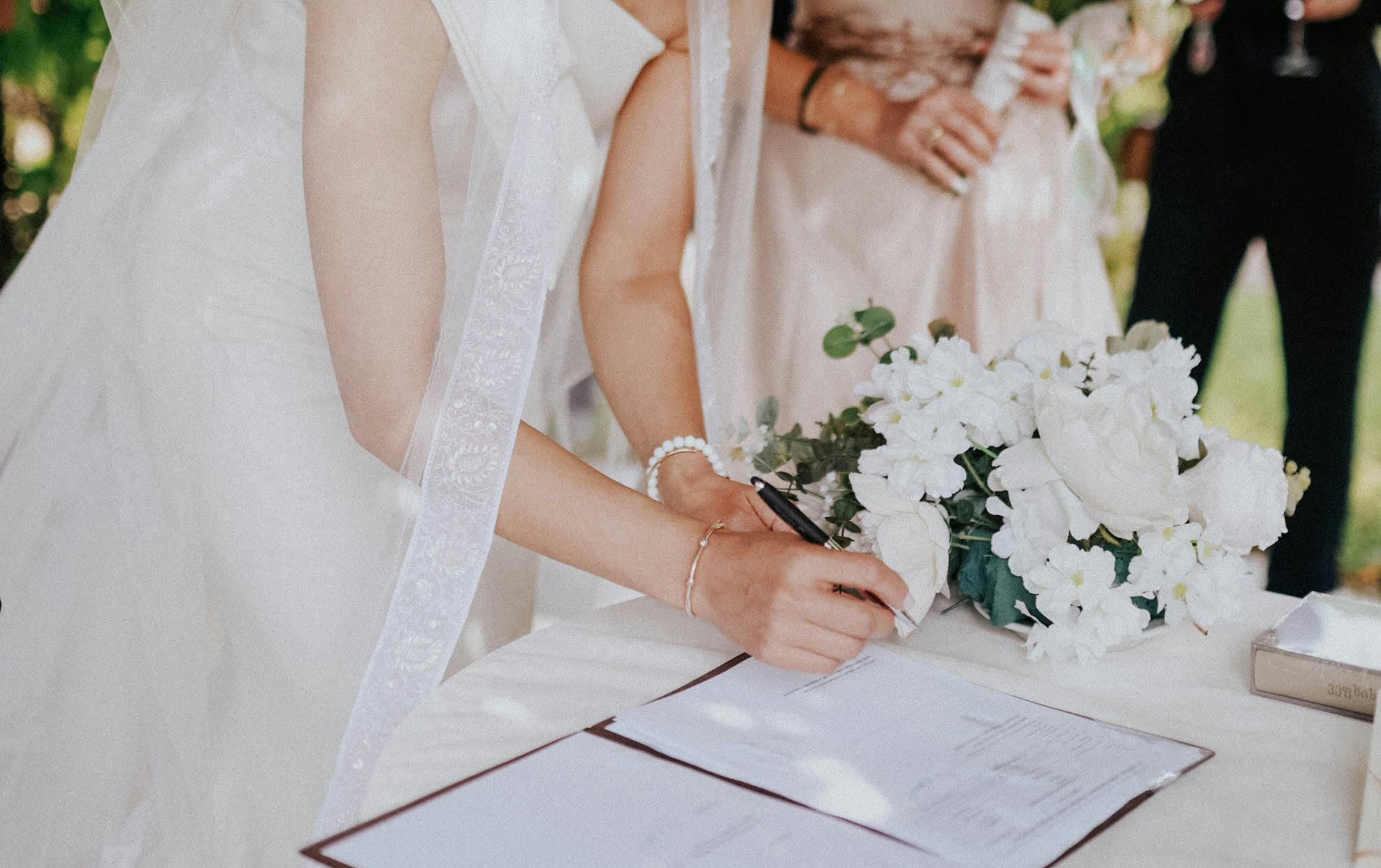
When to Start Planning for a Legal Destination Wedding
If you are planning to get legally married abroad, timing matters more than most couples expect.
As a general rule, you should start researching legal requirements at least 9 to 12 months before your wedding date. Some destinations require residency periods, advance document submissions, or in-person appointments that cannot be rushed.
The earlier you begin, the more flexibility you have in choosing a destination that actually works with your timeline, rather than discovering later that your dream location comes with a six-week paperwork requirement you did not budget for.
This is also the stage where couples often decide whether a fully legal destination ceremony is realistic, or whether a symbolic ceremony paired with legal paperwork at home might be a simpler path.
What Couples Often Forget
Even well-organized couples tend to underestimate the administrative details that come with marrying abroad.
Some of the most commonly overlooked details include:
- Documents needing to be recently issued, not just “still valid”
- Translation requirements for official paperwork
- Apostille or legalization processes that can take weeks
- Arrival timelines if the destination requires you to be present before the ceremony
- Witness requirements that vary by country and are easy to miss until the last moment
- The fact that some countries require multiple appointments, not just one ceremony date
None of these are dramatic on their own, but together they can quietly shape your entire planning timeline if they are not accounted for early.

If You Are Still Choosing a Destination
Legal requirements often become easier or more complicated depending on where you go. If you are still in the early stages of planning, it can help to narrow your options by region first, then refer to the legal requirements explained in each destination guide below.
Start here:
- Best European Destination Wedding Locations
- Top 5 Wedding Destinations in Southeast Asia
- Best Caribbean Destination Wedding Locations
Think of this as your shortcut to understanding not just where looks beautiful, but where actually works for your kind of wedding.
Destinations Couples Often Turn To for Simpler Legal Ceremonies
While every country has its own rules and nothing is universally simple for everyone, some destinations tend to show up again and again in destination wedding planning conversations because the legal side is generally more straightforward for international couples.
If you are looking for a broader overview of popular destinations for 2026, including how they compare for planning and legal requirements, you can also explore Best Destination Wedding Locations for 2026.
Think of these less as shortcuts and more as places where the process is already familiar with couples arriving with passports and big plans.
- Denmark: Often talked about as one of the more straightforward places in Europe for civil marriage, especially for international couples dealing with mixed documentation situations
- Portugal: A popular choice where the legal process is well established and commonly navigated by foreign couples
- Greece: A favourite for destination weddings, with civil ceremonies available and requirements that are widely documented, even if they still need careful planning
- Mexico: A long-time classic for destination weddings, where civil ceremonies are common in tourist areas and supported by experienced local coordinators
- Caribbean destinations (including Jamaica or the Bahamas): Places that are very used to hosting weddings from abroad, with processes that are set up to handle international couples regularly
Even in these destinations, nothing is entirely one-size-fits-all. Requirements can shift depending on your nationality, the specific region, and sometimes even the office you are dealing with.
Which is really just another way of saying: it still pays to read the fine print, even when the setting looks like a postcard.

In the end, it’s about the Ceremony
At the end of the day, most couples do not remember the paperwork in detail.
They remember the moment it all actually happens. The ceremony. The atmosphere. The small, specific details that no checklist ever really captures.
Legal requirements are important, and they absolutely shape how and where a destination wedding can take place. But they are the structure, not the story.
Whether the legal part happens abroad or at home, what tends to stay with people is not the documentation process, but the experience built around it.
Because destination weddings are ultimately not about navigating paperwork in another country.
They are about choosing a place, and a moment, that feels like the beginning of something meaningful.